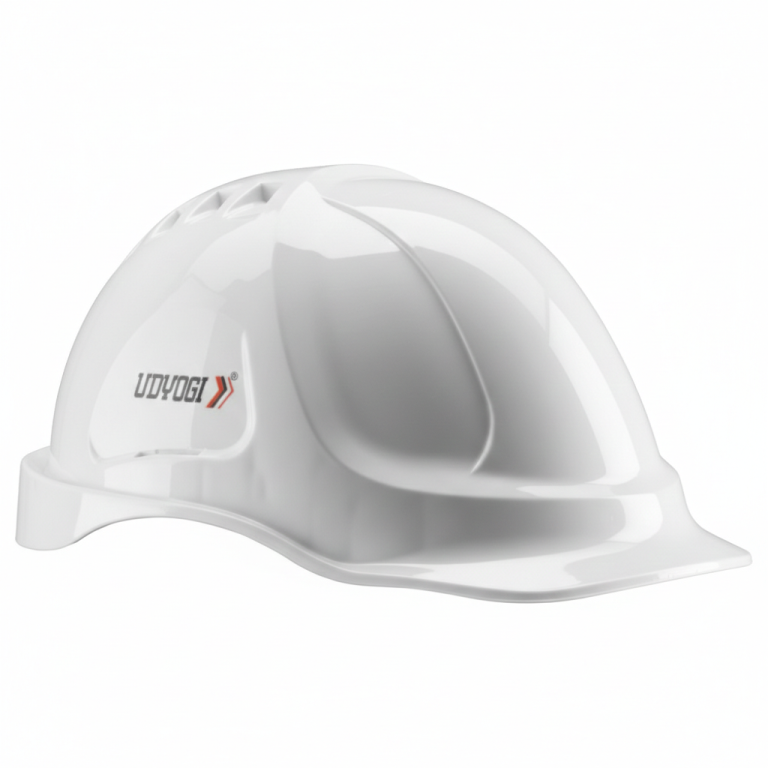
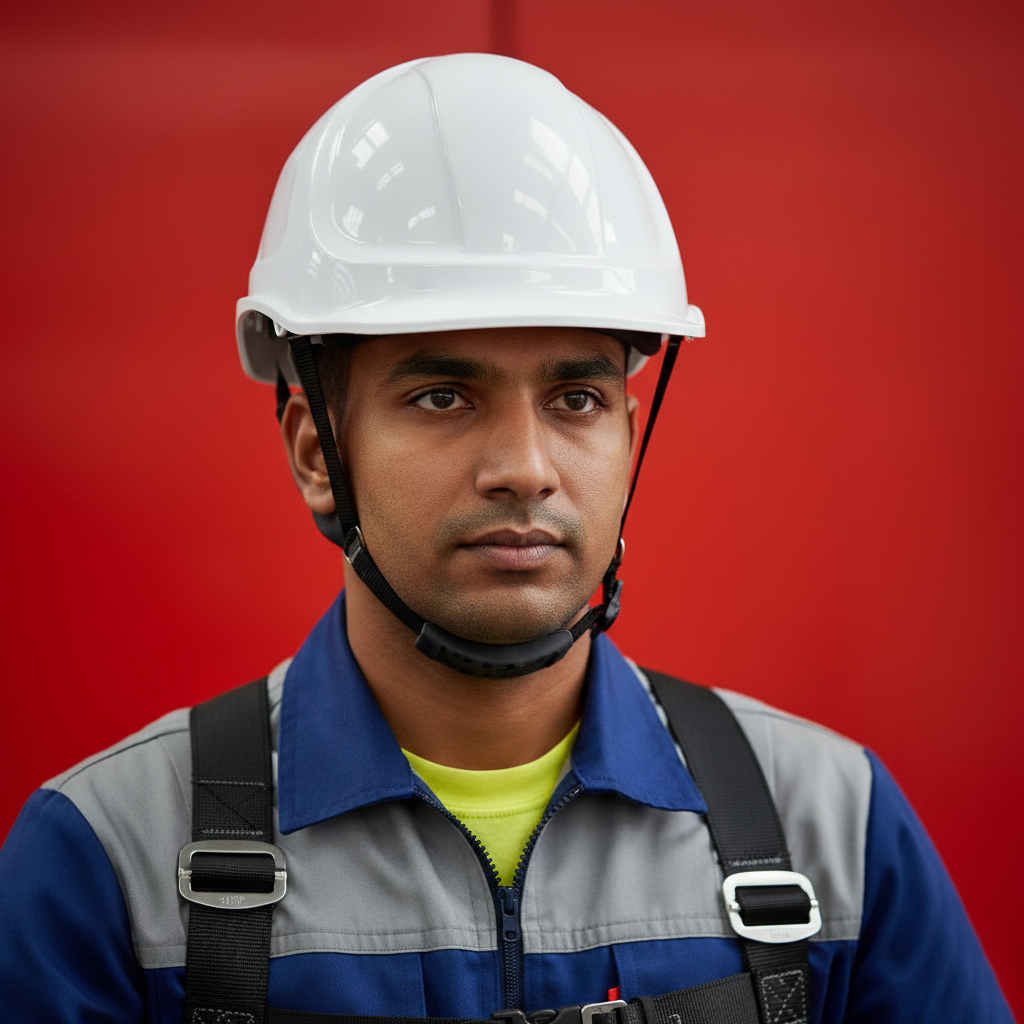
Udyogi Fusion, ABS (Acrylonitrile Butadiene Styrene) helmet ensures excellent impact resistance, making it suitable for use in harsh environments.
It also absorbs shock and resistant to many chemicals, including acids, alkalis, and oils, making it suitable for use in industrial environments where exposure to hazardous substances is possible, designed to meet IS 2925:1984 and EN 397:2012 standard.
4-point crown ventilation system provides air circulation & comfort
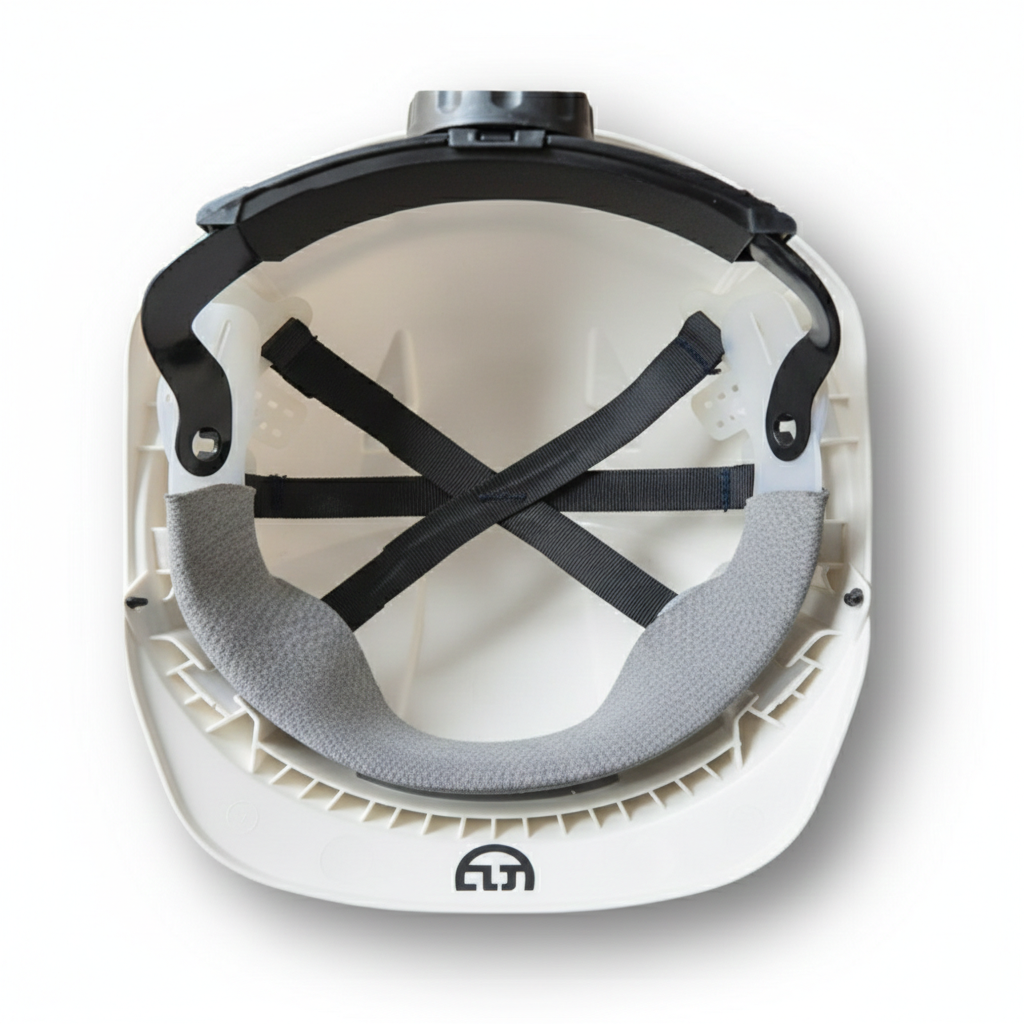
8-point textile suspension with ratchet fit adjustment
Tensile strength is higher than HDPE helmets yet light weight
Excellent rain management system to effectively reduce the flow
of water down the neck
Aesthetic, aerodynamic look with smooth finish – solid colour resin for a permanent, no-chip, no-peel finish.
Benefits
Cost-Effective: The helmet’s ABS construction is impact resistant, making it suitable for use in different environment.
Regulatory Compliance: Assists in meeting safety and environmental regulations by providing protection against falling objects
Safety Improvement: The textile suspension system with a ratchet fit mechanism allows for easy and precise adjustment, ensuring a secure and comfortable fit.
Recyclable: Prevents hazardous substances from spilling onto the ground or into waterways
Durability: The robust construction and impact-resistant properties of the HDPE shell ensure long-lasting performance, even in harsh conditions
Application
The ABS shell provides excellent protection against falling objects which ensures the wearer’s safety in case of an accident.
ABS is resistant to many chemicals, including acids, alkalis, and oils, making it suitable for use in industrial environments where exposure to hazardous substances is possible.
The helmet can withstand different weather conditions without degrading, ensuring consistent performance in diverse outdoor environments.
Safety Info
When worn and maintained properly, safety helmets do a great job of protecting your head from a single impact.
Excessive discoloration of the shell color of the surface may indicate a loss of strength. Such helmets should be discarded.
All components, shells, harnesses, headbands, and accessories should be visually inspected at least weekly.
Helmets with sound shells but with damaged, excessively dirty, or defective harness components should be withdrawn from service and the complete harness and cradle replaced