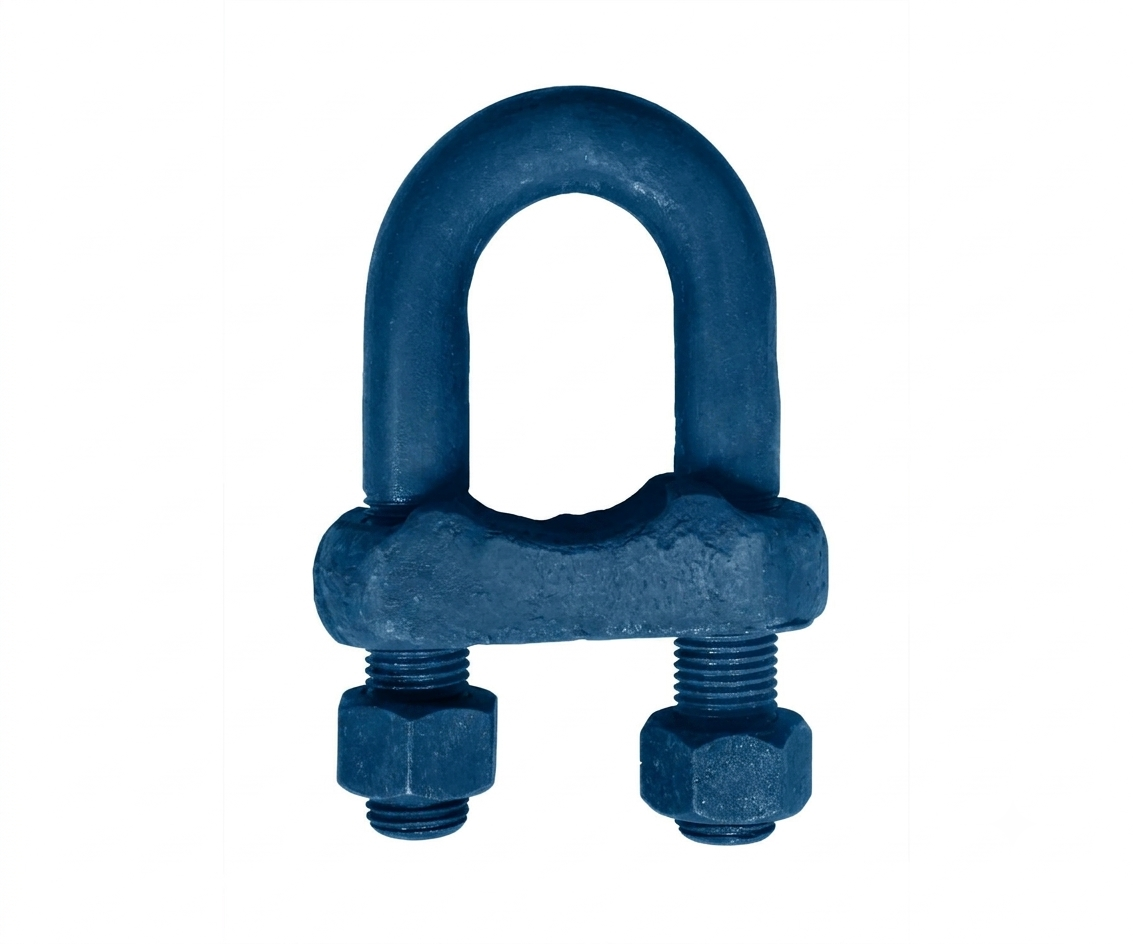
Forged Grip Bull Dog Wire Rope Grip
1. What is a Forged Bull Dog Wire Rope
Grip?
A forged wire rope grip (popularly known as
a Bull Dog Grip or wire rope clamp) is a heavy-duty mechanical rigging
device used to clamp two lengths of wire rope together or to form a temporary,
secure loop (eye) at the end of a wire rope on-site.
Unlike cheaper, commercial-grade cast iron clamps,
authentic Bull Dog grips are drop-forged from high-tensile carbon steel
and heat-treated. This heavy-duty manufacturing process ensures they can
withstand the immense crushing and crushing-resistant forces required for
critical overhead tie-downs, tensioning, and load-securing applications.
A single grip assembly consists of three robust
components:
1. A forged
steel saddle (the grooved base that cradles the live rope).
2. A
heavy-duty steel U-bolt (threaded on both ends).
3. Two
high-tensile hex nuts.
2. Technical Features
- Drop-Forged
Saddle Construction: The heavy-duty base is forged rather than
cast, providing uniform grain flow, high structural density, and unmatched
resistance to cracking under high torque.
- Corrosion
Protection: The entire assembly is typically hot-dip
galvanized or electro-galvanized to resist rust, weathering, and harsh
outdoor exposure.
- Interlocking
Grooves: The interior of the forged saddle features
precision-machined ridges that match the helical lay of the wire rope,
providing a high-friction, non-slip mechanical bite without cutting the
outer strands.
- Stamped
Markings: Legitimate industrial Bull Dog grips come
clearly stamped with the matching wire rope diameter size (e.g., 12mm,
5/8", 1") directly on the saddle for instant inspection
compliance.
- High
Efficiency: When properly applied in accordance with
rigging standards (such as ASME B30.26), a sequence of clips can achieve
an efficiency rating of 80% to 90% of the wire rope's catalog
breaking strength.
3. Common Uses and Applications
While wire rope clips are not permitted to
fabricate slings for standard overhead hoisting, they are the industry standard
for a massive range of critical pulling, securing, and suspension tasks:
- Guy
Wire Tensioning: Securing heavy structural guy wires for
industrial chimneys, transmission towers, telecommunication masts, and
flare stacks.
- Winch
Line & Towing Ends: Forming quick, highly
secure field loops on winch lines, heavy vehicle recovery lines, and
marine pulling ropes.
- Cargo
Tie-downs & Lashing: Securing massive industrial
machinery, military equipment, and structural components on flatbed
trailers, railcars, and ship decks.
- Suspension
Systems: Hanging heavy-duty industrial curtains,
temporary safety netting, overhead lighting trusses, and structural
scaffolding support lines.
- Field
Repairs: Making immediate, dependable field
terminations when heavy hydraulic swaging presses or mechanical splicing
loops are completely inaccessible.
4. Key Advantages
- Heavy-Duty
Safety Over Cast Clamps: Drop-forged steel will
deform or bend slightly under extreme shock loads rather than snapping
catastrophically like brittle cast-iron commercial grips.
- No
Special Tools Required: Can be installed easily in
the field using standard impact sockets, torque wrenches, or heavy-duty
spanners.
- Fully
Reusable: Unlike permanent copper or aluminum swaged
sleeves, Bull Dog grips can be unbolted, inspected, and reused for
adjusting cable lengths or setting up new rigging configurations.
- Exceptional
Slip Resistance: The precision-engineered saddle grooves bite
into the rope profile uniformly, preventing the wire rope from slipping or
unravelling even under intense vibrating loads.
- Weather
and Chemical Proof: Highly resilient to grease, industrial oils,
salt air, and extreme outdoor environments, making them perfect for marine
and heavy construction applications.
5. The Golden Rule of Rigging Safety
When installing wire rope clips, there is an
absolute safety rule that every rigger must memorize: "Never saddle a
dead horse." The forged saddle must always rest against the live
(load-bearing) end of the wire rope, while the U-bolt rests directly on the
dead (short, turned-back) tail. Placing the U-bolt on the live end will
crush the structural strands and drastically reduce the cable's safe loading
limit.
|
Installation
Parameter
|
Requirements
for Maximum Safety
|
|
Clip
Alignment
|
All
saddles must point in the exact same direction (on the live wire).
|
|
Torque
Verification
|
Must be
tightened to specified industrial torque values using a torque wrench, then re-torqued
after the rope is put under initial load tension.
|
|
Minimum
Clip Count
|
Varies
by rope diameter; typically ranges from 3 clips for smaller ropes (12mm)
up to 6 or more clips for larger heavy-duty industrial cables (25+ ).
|
Enquiry Now