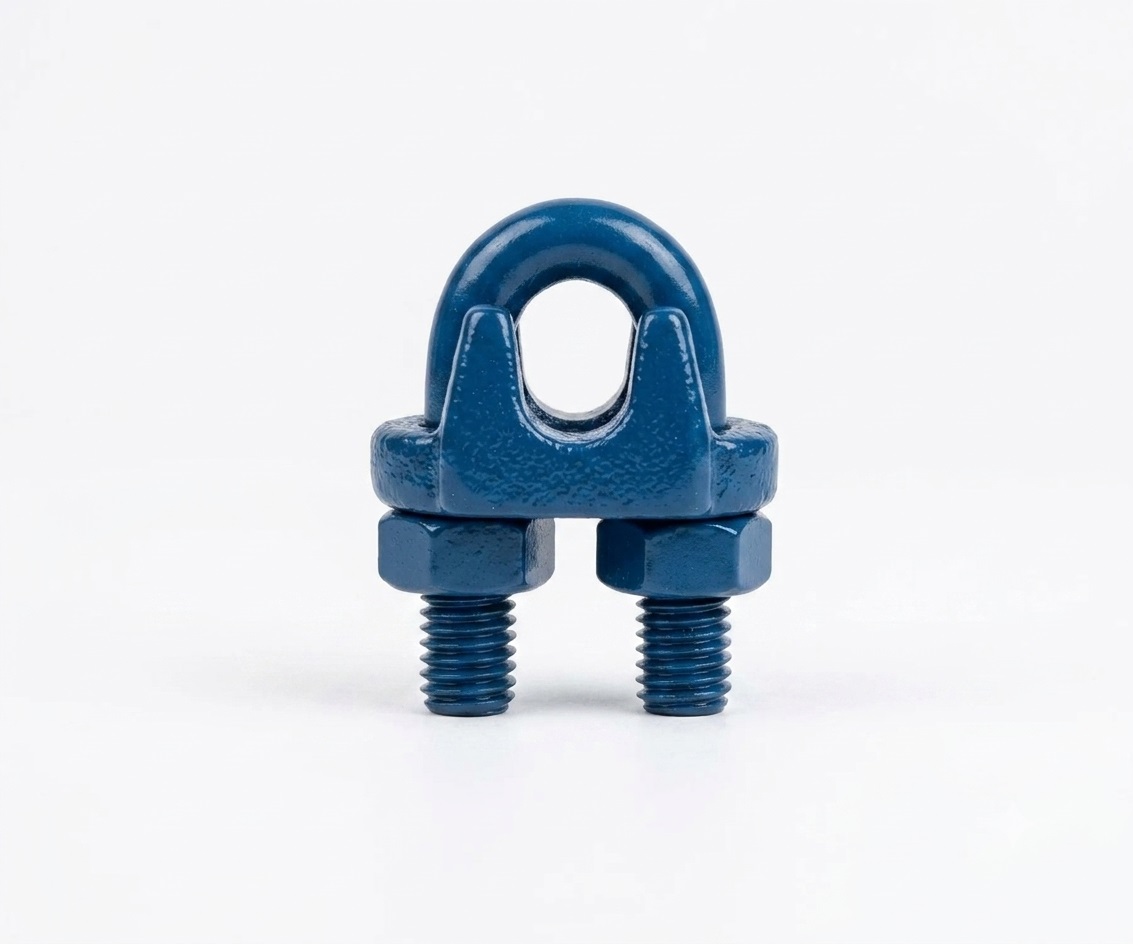
FORGED GRIP-BULLDOG GRIP WIRE ROPE CLAMP SS
What is a Forged Stainless Steel Bull Dog Wire Rope Grip?
A forged
stainless steel Bull Dog wire rope grip (also widely known as an SS wire
rope clamp or clip) is an ultra-premium, marine-grade rigging component
engineered to clamp two sections of wire rope together or to form a highly
secure, rust-proof terminal loop (eye) at the end of a cable.
While
galvanized grips are standard for heavy construction, this variant is drop-forged
from high-grade stainless steel (typically Grade 316 or Grade 304).
The drop-forged manufacturing process compresses the grain structure of the
steel, providing incredible structural density and preventing the cracking or
shattering risks associated with cheap cast-iron clamps. Combined with the
natural properties of stainless steel, it offers the ultimate defense against
aggressive chemical, acidic, and marine environments.
The heavy-duty
assembly consists of three core components:
- The Forged SS Saddle: The thick, high-density
stainless steel base featuring precision-machined internal ridges designed
to grip the spiraled wire rope strands uniformly.
- The SS U-Bolt: A threaded, high-tensile
stainless steel U-shaped rod that wraps securely around the cable tail.
- Two Heavy SS Hex Nuts: High-grade stainless steel
nuts torqued down to permanently lock the clamp assembly into place.
Technical Features
- Premium Marine-Grade
Stainless Steel (SS316 / SS304): Offers maximum resistance to pitting, crevice
corrosion, and oxidation, making it highly superior to galvanized
alternatives in chemical-heavy environments.
- Drop-Forged Grain Alignment: Forging ensures a ductile
structural base that will yield or bend slightly if drastically
overloaded, providing a critical visual warning rather than failing
suddenly.
- Precision-Machined
Interlocking Grooves: The interior channel of the forged SS saddle
is lined with helical ridges that mirror the exact lay of industrial wire
ropes, maximizing friction grip while protecting the outer strands from
sharp shearing forces.
- Stamped Material & Size
Identifiers:
Stamped with both the exact cable diameter size (e.g., 6mm, 12mm,
1/2") and the steel grade (316 or 304) directly
onto the saddle body for immediate site compliance verification.
- Excellent Temperature
Resilience:
Maintains full mechanical properties and structural stability in extreme
sub-zero conditions as well as high-heat industrial applications.
Common Uses and Applications
While
wire rope clips are strictly not permitted for fabricating slings used
in overhead crane hoisting, they are the global standard for heavy-duty
securing, tensioning, and architectural applications:
- Marine Rigging &
Architecture:
Securing yacht shrouds, sailboat mast rigging, dockside boat lifelines,
and port hoisting lines exposed to constant saltwater spray.
- Chemical & Wastewater
Treatment Plants: Terminating structural guide wires and sensor
lines near aggressive chemical tanks, volatile gases, or water treatment
facilities.
- Outdoor Architectural
Rigging:
Creating architectural wire balustrades, sleek balcony railings, security
fencing, and green-wall plant trellis networks where aesthetics and rust
prevention are crucial.
- Food & Pharmaceutical
Processing Hubs:
Suspension lines and tie-downs for overhead production equipment where
components must stand up to rigorous washdowns, sanitizing chemicals, and
steam cleaning.
- Shade Sails & Tensile
Canopies:
Tensioning and clamping high-load perimeter cables for heavy-duty outdoor
commercial shade sails, stage structures, and large architectural tents.
Key Advantages
- Maximum Lifespan in
Corrosive Zones:
Unlike galvanized clips where the protective zinc layer slowly wears away
or scratches off, stainless steel is rust-resistant all the way through,
offering decades of service life.
- Clean, Professional
Aesthetic: The
bright, polished silver finish of stainless steel delivers a highly
aesthetic, clean look preferred for modern architectural design and luxury
marine crafts.
- Infinite Reusability: The heavy-duty threads on
the forged SS U-bolts resist stripping and galling (when properly
lubricated), allowing the grips to be easily unbolted, adjusted, or reused
across different setups.
- Zero Sparking Risk: High-quality stainless
steel provides non-magnetic and low-sparking properties, making it safer
to use around volatile chemicals or explosive zones.
- No Specialized Machinery
Required: Can
be easily installed right in the field or on a vessel using standard
spanners, deep sockets, or a calibrated torque wrench.
The Golden Rule of Clamping Safety
When
assembling your wire rope terminations, you must always strictly practice the
universal rigging rule: "Never saddle a dead horse."
[Image
demonstrating the correct installation of wire rope clamps with the saddle on
the live line and the U-bolt on the dead line]
- The Live Line: The section of the wire
rope carrying the structural load. The forged stainless steel saddle
must always sit on this side to protect the load-bearing strands.
- The Dead Tail: The short, turned-back end
of the wire rope. The U-bolt must always press directly
against this side. Reversing this configuration will cause the thin U-bolt
to crush the live line, drastically lowering its safe breaking strength.
|
Parameter
|
Recommended Field Compliance
Guidelines
|
|
Clip Alignment
|
All stainless steel grips must
face the exact same direction (saddles matching the live line).
|
|
Torque Check
|
Must be torqued down to
standard torque limits using a torque wrench, then re-torqued after
the wire rope is placed under its first operational load tension.
|
|
Minimum Grip Count
|
Varies by rope thickness;
typically a minimum of 3 grips for smaller cables (6mm} - 12mm) up to 4
to 6 grips for heavier industrial cables (16+ ).
|
Enquiry Now