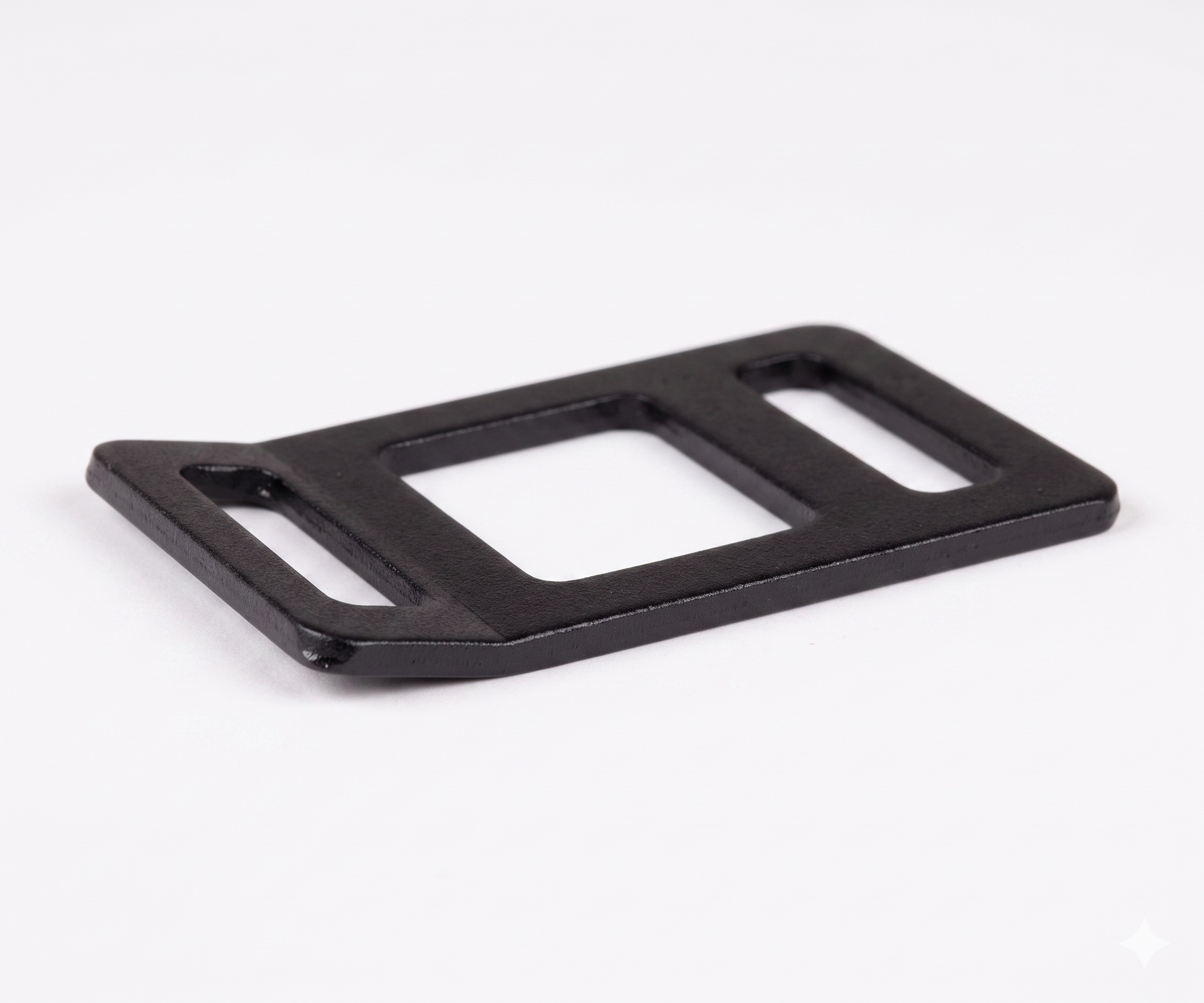
AGL03406-Lifting Plate Buckle
A plate
buckle (often referred to in industrial lashing as a one-way lashing
buckle, stamped steel buckle, or ladder buckle) is a
high-strength, heavy-duty hardware component used exclusively with heavy-duty
woven polyester lashing or composite strapping.
Unlike
ratchet buckles which have moving parts, a plate buckle is a solid, static
piece of hardware engineered to lock webbing in place using tension and
friction.
1. Detailed Mechanical Breakdown
A plate
buckle is manufactured by stamping or forging a heavy-gauge sheet of
high-tensile steel into a flat, rigid profile with precisely engineered slots
(usually two or three parallel slots).
- The Friction Principle: The strap is threaded
through the slots in a specific "over-and-under" pattern. When
tension is applied to the strap (usually via a manual or pneumatic
tensioner tool), the strap presses tightly against itself and the edges of
the steel plate.
- The Self-Locking Mechanism: The greater the tension
applied by the load, the harder the strap bites down onto the buckle's
slots. This creates a fail-safe friction lock with zero slippage.
2. Technical Specifications
While
exact specs vary by manufacturer and heavy-duty industrial requirements,
standard specifications for industrial plate buckles generally include:
|
Parameter
|
Typical Industrial Specification
|
|
Material
|
High-Tensile
Carbon Steel / Alloy Steel
|
|
Surface
Treatment
|
Zinc-Plated,
Galvanized, or Powder Coated (For corrosion resistance)
|
|
Compatible
Strap Widths
|
25 mm,
32 mm, 40 mm, and 50 mm
|
|
System Breaking
Strength (S.B.S)
|
2,000
kg (2 Ton) to over 7,500 kg (7.5 Ton)
|
|
Thickness
|
5 mm to
8 mm depending on the load capacity
|
|
Joint
Efficiency
|
Up to
80% - 90% of the strap's maximum breaking strength
|
3. Common Uses & Industrial Applications
Plate
buckles are predominantly used in one-way cargo securing and
heavy-export packaging where the securing hardware travels with the cargo and
is not returned.
- Flat Rack & Open-Top
Container Lashing: Securing oversized industrial equipment,
heavy machinery, large transformers, and wind turbine components onto flat
rack ocean containers.
- Dynamic Heavy Loads: Securing heavy steel coils,
structural steel pipes, bundles of timber, and concrete blocks for
international transit.
- Cross-Lashing & Choking: Used inside shipping
containers to create rigid cross-lashing nets or matrices to prevent large
crates or chemical drums from shifting forward or backward.
- Railcar Loading: Tie-down applications on
open railway wagons subjected to severe shunting forces.
4. Key Advantages of Plate Buckles
- Maximum Economic Efficiency: Because they are stamped
from solid steel plates without complex moving gears or springs, they are
highly cost-effective. This makes them ideal for export lashing where the
hardware cannot be recovered.
- High Joint Efficiency: The flat design allows for
a large surface contact area with the woven lashing tape. This ensures the
strap does not twist or bunch up inside the buckle, maintaining up to 90%
of the strap’s inherent strength.
- Zero Mechanical Failure
Risk:
With no moving parts, rivets, springs, or pawls, there is absolutely
nothing to break, jam, jam up with dust, or fail due to severe vibrations
during transport.
- Extremely Low Profile: The flat design ensures the
buckle takes up minimal space. It won't protrude or damage adjacent cargo
packaging, which can happen with bulky mechanical ratchets.
- High Weather and Shock
Resistance:
Heavy zinc plating protects it against maritime salt spray and harsh
outdoor construction environments. Furthermore, it absorbs heavy dynamic
shocks (sudden road bumps or sea waves) without popping open.
Enquiry Now