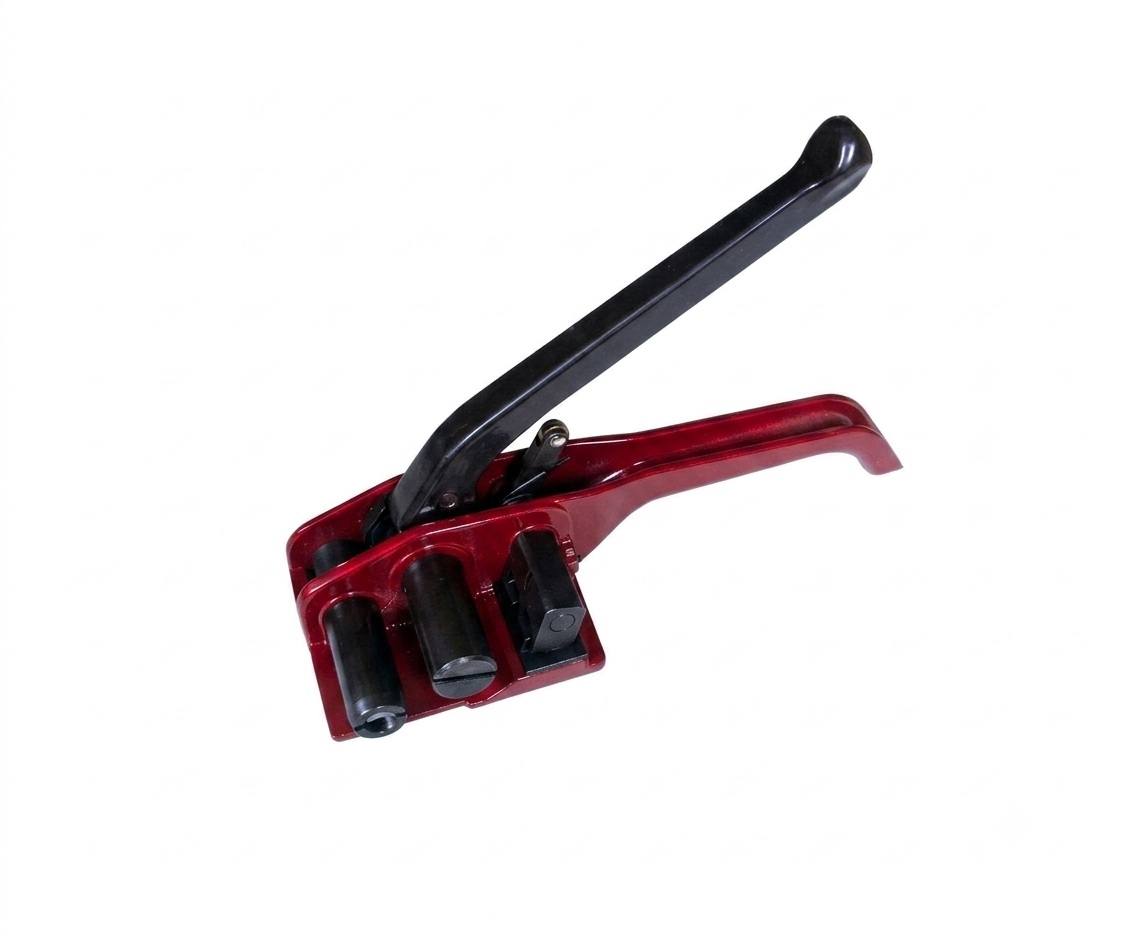
AGL03407-Lifting Ratchet Tensioner
A ratchet tensioner (often referred to as a ratchet buckle or load
binder, depending on the specific industry application) is a mechanical device
used to tighten, tension, and secure straps, cables, or chains. It uses a
ratcheting mechanism to apply high tension with minimal physical effort and
locks automatically to prevent slipping.
Here is a
detailed breakdown of its design, applications, and advantages.
1. Detailed Breakdown of a Ratchet Tensioner
A
standard ratchet tensioner operates on a simple but highly effective mechanical
design. It consists of several key components that work together to handle
heavy loads:
- The Handle (Lever): The main lever used to
manually pump and rotate the geared drum. A longer handle provides greater
mechanical advantage.
- Geared Rotating Drum
(Spool): A
slotted mandrel in the center where the webbing strap or cable winds up as
the handle is pumped.
- Pawls (Catch Mechanisms): * Drive Pawl: Moves
with the handle to push the gears forward.
- Stop Pawl (Spring-loaded): Engages with the gear
teeth to lock the drum in place, preventing it from counter-rotating and
releasing tension when you release the handle.
- Release Lever: A trigger or latch within
the handle that lifts the pawls out of the gear teeth, allowing the drum
to spin freely for quick unwinding and unloading.
2. Common Uses & Applications
Ratchet
tensioners are incredibly versatile and are staples in transportation,
logistics, construction, and heavy industries.
Cargo Lashing and Transport
- Flatbed Trucking & Hauling: Securing heavy machinery,
steel coils, building materials, and palletized goods onto trucks and
trailers.
- Shipping & Logistics: Tie-down systems for
securing cargo containers, crates, and vehicles inside shipping containers
or on cargo ships.
- Logistics & Vans: Securing internal loads in
commercial delivery vans to prevent shifting during transit.
Industrial & Construction Safety
- Material Handling: Creating temporary or
permanent tie-down anchor points for heavy equipment.
- Erection & Framework: Temporarily holding
structural components, scaffolding, or formwork in place under tension
during construction.
- Lifting Support (Load
Binding):
Heavy-duty ratchet chain binders are used to tension transport chains
securing extremely heavy industrial loads like excavators or steel beams.
Specialized Applications
- Event Infrastructure: Tensioning large commercial
tents, marquees, and temporary stage structures against wind forces.
- Aviation & Marine: Securing small aircraft on
tarmacs or securing boats and jet skis to trailers.
3. Key Advantages of Ratchet Tensioners
Compared
to traditional securing methods (like tying knots, using cam buckles, or manual
rope tensioning), ratchet tensioners offer distinct operational advantages:
- Superior Mechanical
Advantage: The
gear-and-lever system multiplies human strength, allowing an operator to
generate massive tension forces (often thousands of kilograms) that would
be impossible to achieve manually.
- Positive Fail-Safe Locking: Once tensioned, the
spring-loaded stop pawl mechanically locks into the gear teeth. It cannot
slip or come undone due to vibrations, road bumps, or shifting loads
during transit.
- Controlled and Incremental
Tensioning: It
allows the user to tighten the strap or chain click-by-click. This precise
control ensures the load is secure without over-tightening and damaging
fragile cargo.
- Speed and Efficiency: Securing and releasing a
load takes a fraction of the time compared to tying complex industrial
knots or using manual turnbuckles. This significantly cuts down
turn-around times in logistics.
- High Durability and Weather
Resistance:
Typically constructed from high-tensile forged steel, zinc-plated, or
powder-coated finish, they are highly resistant to corrosion, heavy wear,
and harsh outdoor environments.
- Ergonomic and Safe: They reduce physical strain
on workers. Because the mechanism handles the high force, there is a
significantly lower risk of injury compared to manual rope-pulling or
primitive lever bars that can snap back violently.
Enquiry Now