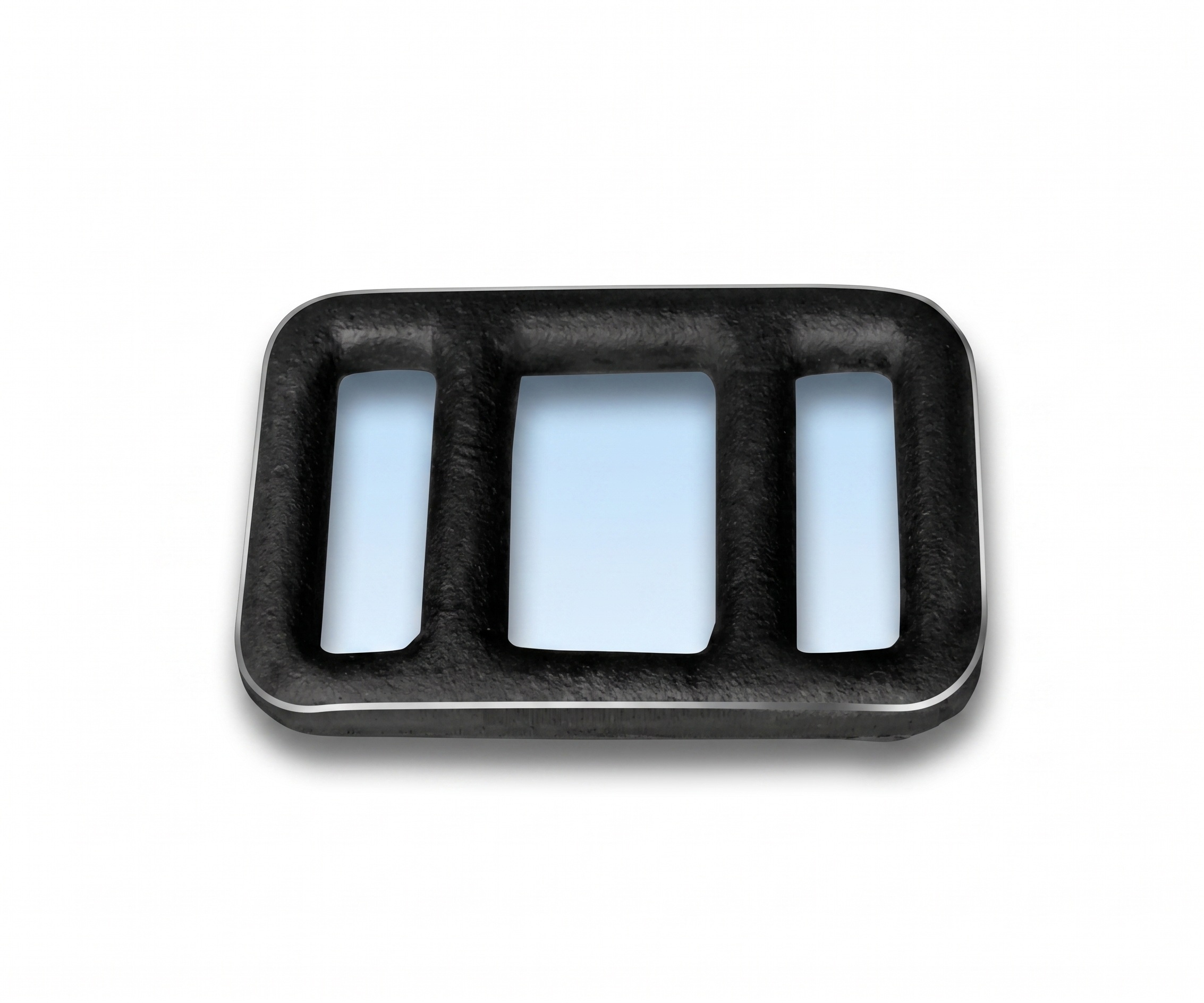
AGL03408-Lifting Rod Buckle
A rod
buckle (widely known in the heavy-duty packaging and shipping industry as a
wire buckle, ladder wire buckle, or phosphated/galvanized wire
buckle) is a high-strength hardware component used to join and secure
heavy-duty composite strapping, woven polyester lashing, or PP strapping.
Unlike
flat plate buckles, a rod buckle is manufactured by precision-bending a heavy,
solid steel rod into a specific geometric shape. It relies on a self-locking
loop system where the tension of the strap locks the buckle firmly in place.
1. Detailed Mechanical Breakdown
A rod
buckle features a continuous, looped design with centralized cross-bars. It
operates on a dynamic friction-locking principle:
- The Loop Threading Method: The strapping or lashing
tape is folded into a loop, pushed through the center of the buckle, and
hooked over the outer prongs.
- The Dynamic Lock: When a manual or pneumatic
tensioner pulls the strap taut, the two loops of the strap press hard
against each other over the solid steel rod. The higher the tension or
pull force applied by the shifting cargo, the tighter the buckle grips the
strap.
2. Technical Specifications
Rod
buckles are categorized by their wire diameter, width, and surface finish to
match specific strapping strengths:
|
Parameter
|
Typical
Industrial Specification
|
|
·
Material
|
High-Tensile
Structural Carbon Steel Rod / Spring Steel Wire
|
|
·
Surface Finish Options
|
Galvanized: Smooth and highly
rust-resistant (best for composite straps).
Phosphated: Rough, matte-black texture
providing extra grip friction (best for woven lashing).
|
|
·
Compatible Strap Sizes
|
13 mm,
16 mm, 19 mm, 25 mm, 32 mm, 40 mm, and 50 mm
|
|
·
Wire/Rod Diameter
|
3.0 mm
(light-duty) up to 7.0 mm or 8.0 mm (heavy-duty industrial)
|
|
·
Joint Efficiency
|
85% to
90% of the strap’s maximum breaking strength
|
|
·
System Breaking Strength
|
500 kg
up to over 5,000 kg (5 Ton)
|
3. Common Uses & Industrial Applications
Rod
buckles are the standard closure method for heavy-duty non-metallic strapping
systems across global logistics:
- Bundle & Pallet
Securing:
Bundling heavy industrial goods like metal pipes, aluminum ingots,
structural timber, concrete blocks, and brick stacks for domestic
transport.
- Export Container Stuffing: Securing palletized
chemical drums, paper rolls, and large crates inside standard shipping
containers using woven or composite lashing.
- Agricultural Packing: Binding compressed bales of
cotton, fiber, or agricultural waste for high-tension storage.
- End-of-Line Packaging: Securing heavy machinery
components onto wooden pallets before stretch-wrapping.
4. Key Advantages of Rod Buckles
- Highest Non-Slip Friction
Performance:
Especially when ordered with a phosphated (coated) finish, the
microscopic roughness of the rod ensures that woven polyester straps
cannot slip out, even under intense, repetitive dynamic forces.
- Easy Re-Tensioning
capability: If
a load settles or shrinks during a long journey (such as timber drying
out), an operator can simply re-attach a manual tensioner tool to the
strap tail and tighten the system further without replacing the buckle.
- Cost-Effective for One-Way
Shipping:
Because they are made from bent steel wire rather than cast or machined
components, they offer an incredibly economical solution for one-way
export lashing where the hardware is left at the destination.
- No Sharp Edges: The rounded profile of a
bent rod prevents the buckle from cutting into the strapping material or
damaging the edges of the cargo it is resting against.
- High Shock Absorption: The slight elasticity of
the heavy steel wire rod loop allows it to absorb sudden impacts (like
railcar shunting or rough sea waves) without snapping or releasing the
lock.
Enquiry Now