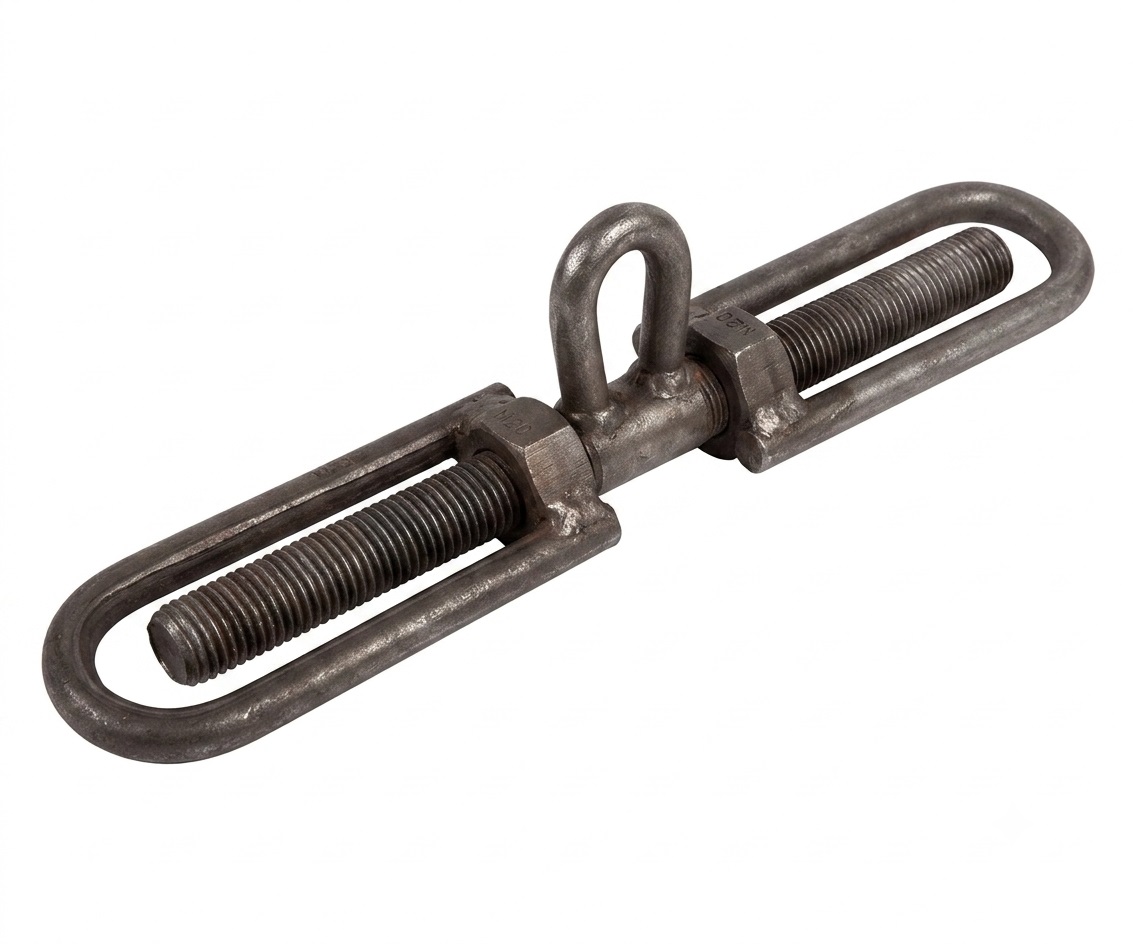
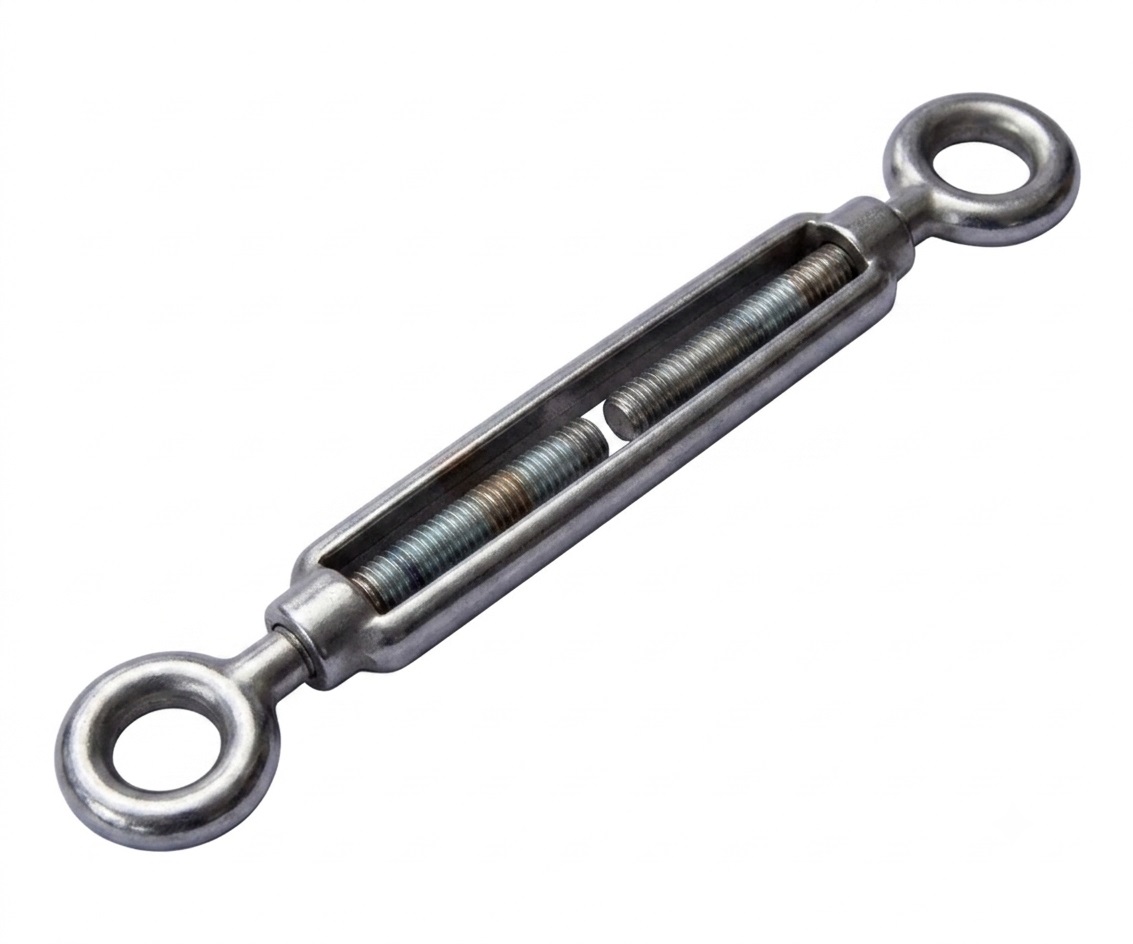
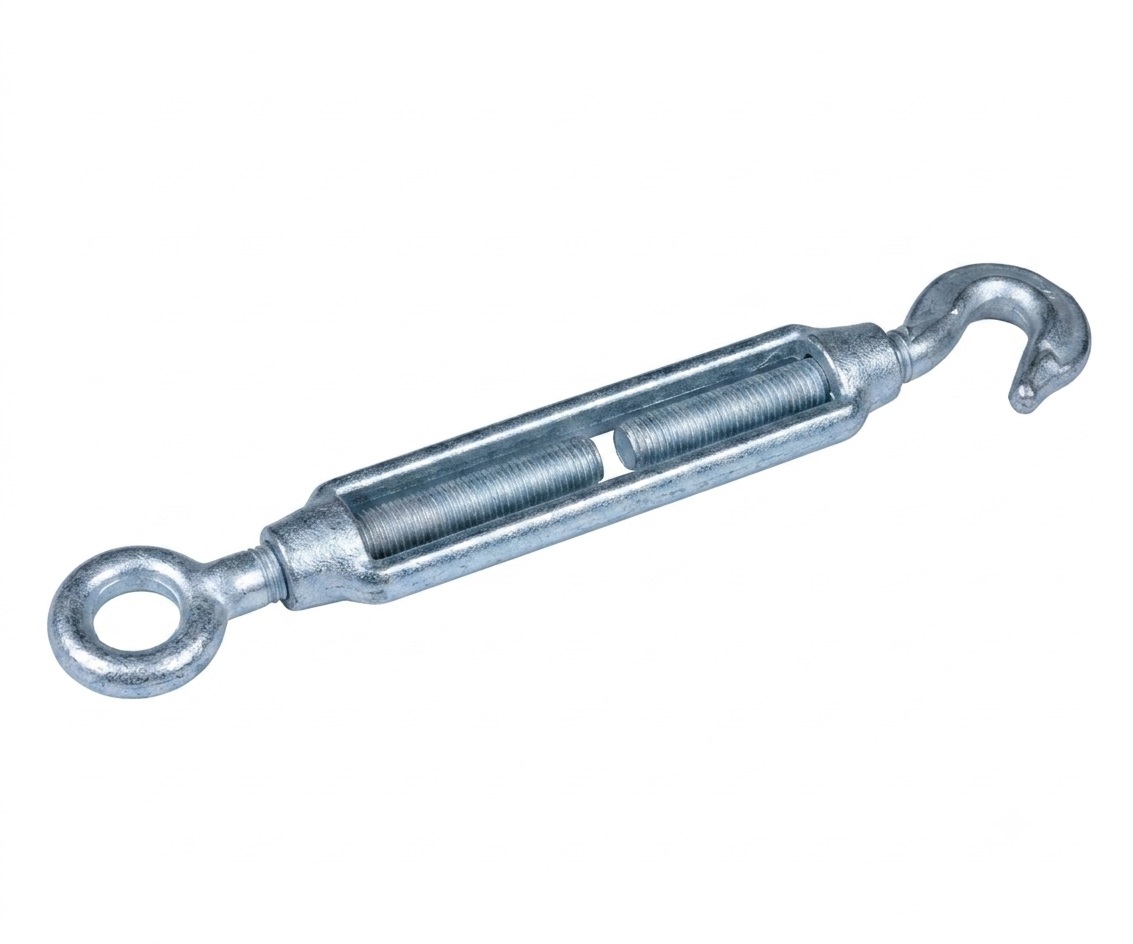
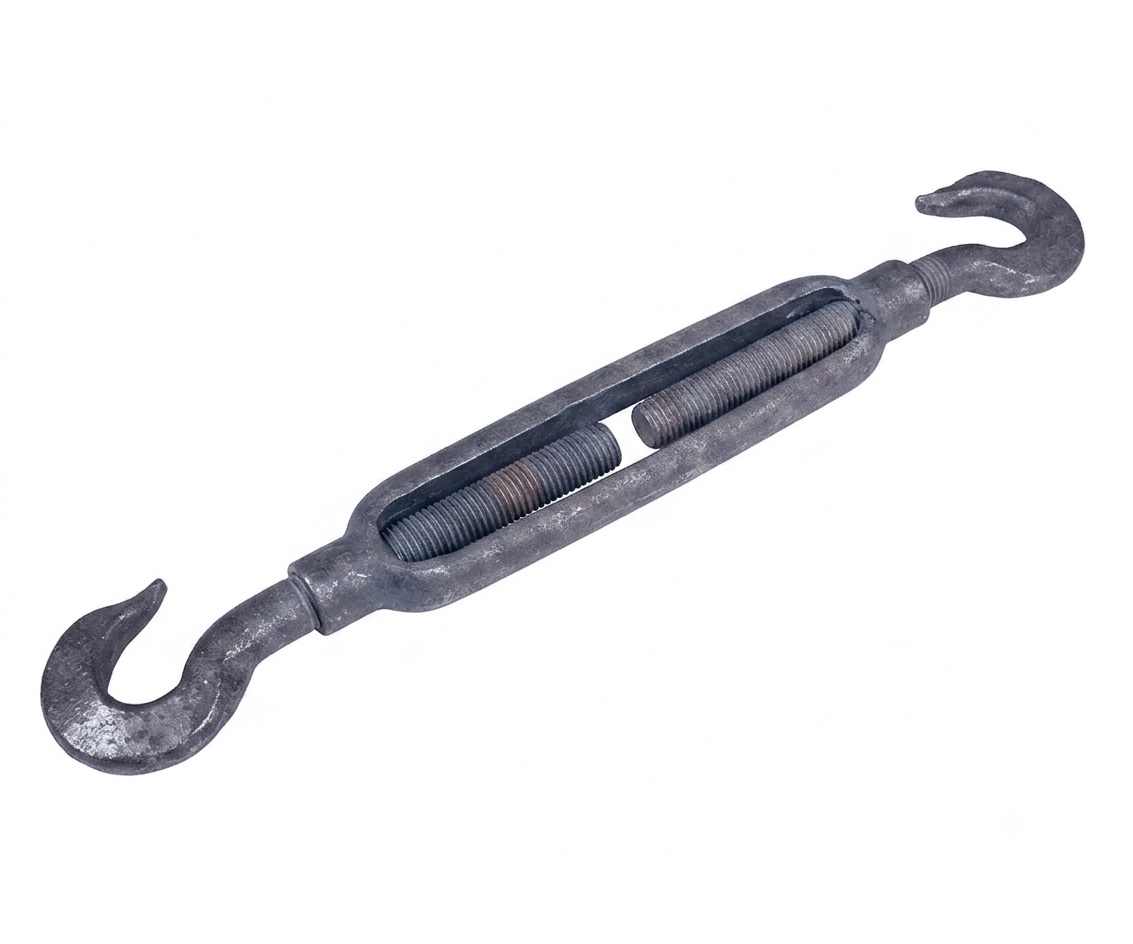
What is a Turnbuckle?
A turnbuckle
(also known as a bottlescrew or rigging screw) is a high-tensile mechanical
tensioning device used to adjust the length, tension, and balance of wire
ropes, tie-rods, chains, and structural cables.
The
assembly operates on a simple yet highly effective mechanical principle: it
consists of a central metal body with two threaded end-fittings
(screws). One end features a standard right-hand thread, while the opposite end
features a left-hand thread. When the central body is rotated in one direction,
both end-fittings pull inward simultaneously, instantly tightening the
connected rigging line. Rotating the body in the opposite direction pushes the
fittings outward, loosening the tension.
Turnbuckles
are typically drop-forged from high-strength carbon steel or stainless steel to
handle high linear pulling forces without stripping their internal threads.
Technical Features
- Dual-Threaded Linear
Mechanics:
Features opposing left-hand and right-hand internal threads, allowing for
precise, stepless tension adjustments without twisting the attached lines
or cables.
- Drop-Forged or Pipe-Body
Design:
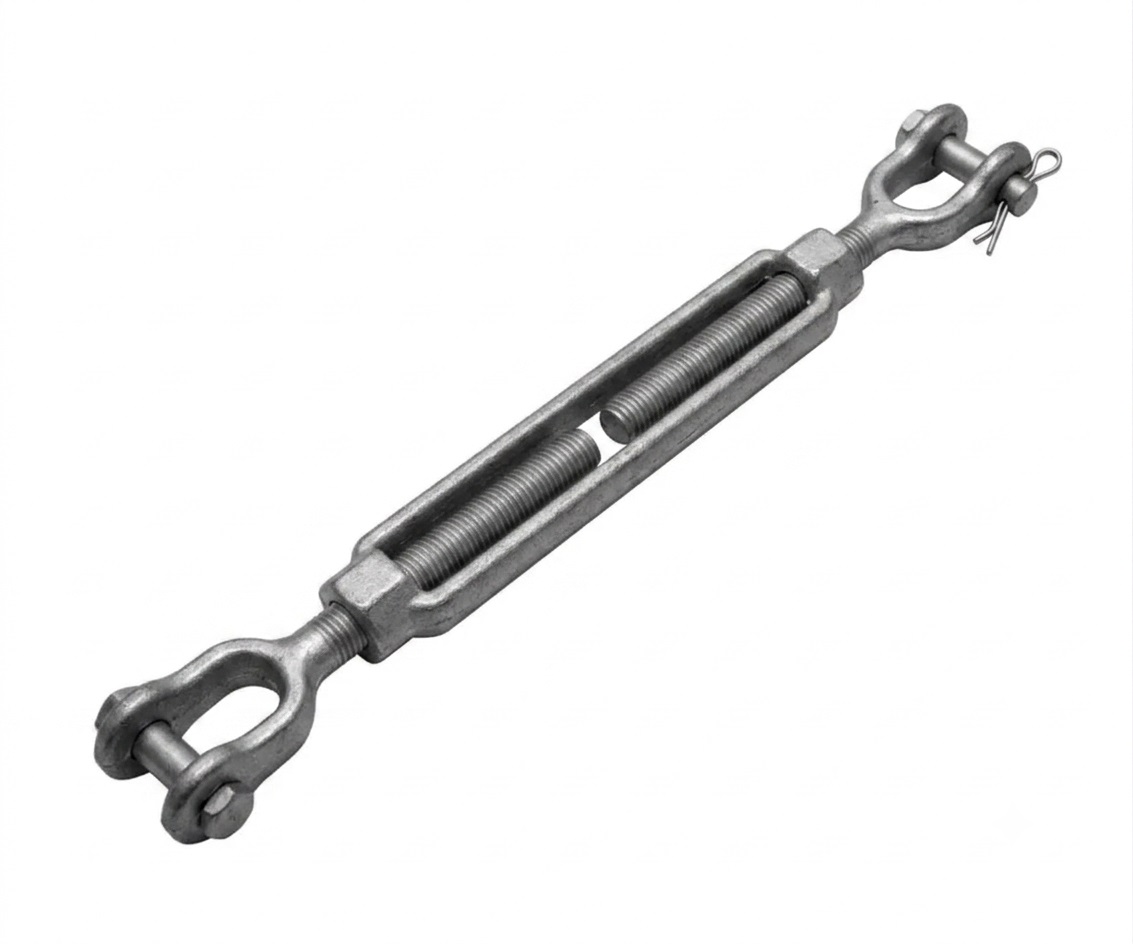
Available in two primary body styles:
- Open-Body: The standard industrial
design, exposing the internal threads for easy visual thread engagement
checks and easy lubrication.
- Closed-Body (Pipe-Body): Encases the threads in a
sleek protective tube, sealing out dust, debris, and moisture—highly
preferred in marine or decorative architecture.
- Varying End-Fitting
Combinations: Can
be mixed and matched depending on the anchor points:
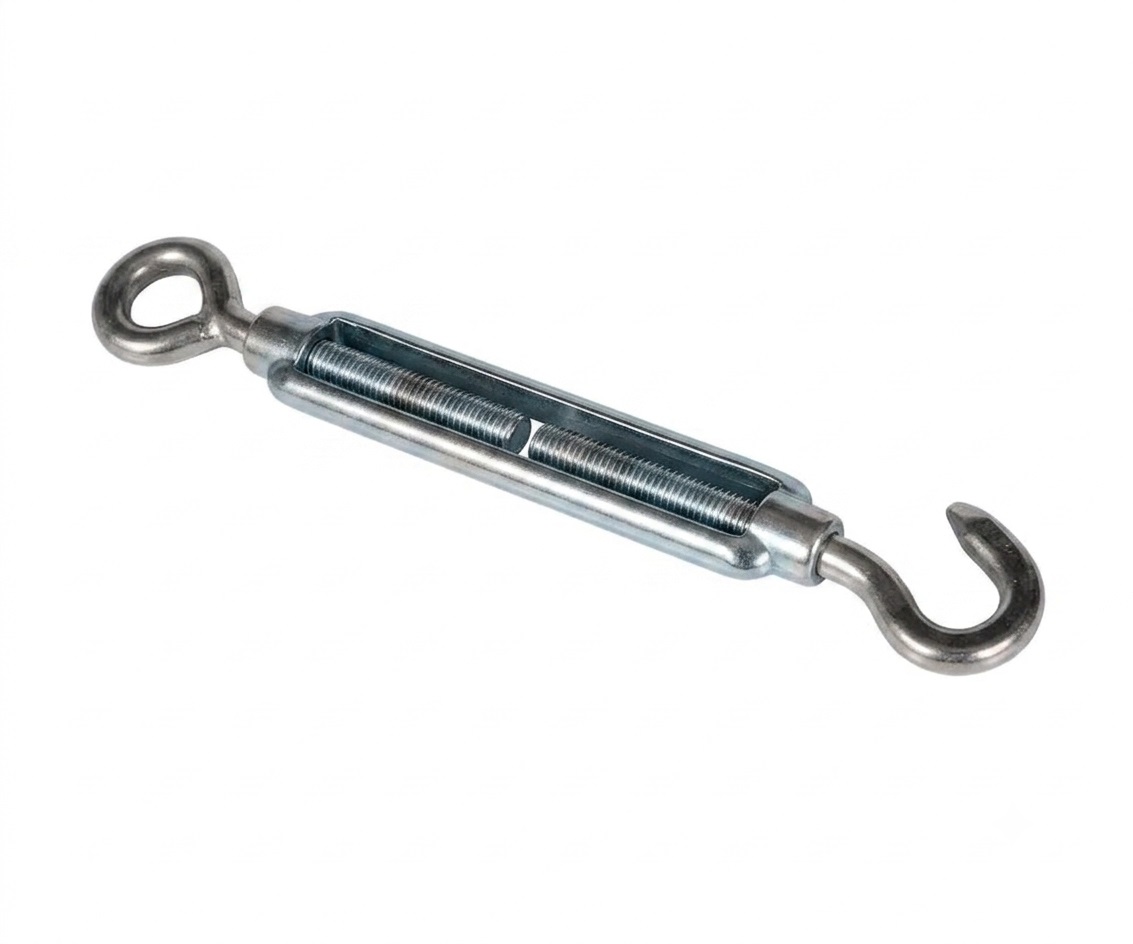
- Eye End: A closed loop used to
connect permanently with shackles, quick-links, or swaged wire rope eyes.
- Hook End: An open hook used for
fast, temporary coupling and uncoupling from anchor rings.
- Jaw (Clevis) End: A U-shaped terminal
featuring a removable clevis pin and cotter pin, designed to connect
directly into stationary plate lugs or eyelets.
- High Working Load Limits
(WLL):
Industrial turnbuckles are manufactured in accordance with rigorous safety
standards (such as Federal Specifications FF-T-791b), offering a strict 5:1
safety factor for standard rigging applications.
- Galvanized or Stainless
Finishes:
Hot-dip galvanized for extreme outdoor weathering and construction
durability, or made from Grade 316 stainless steel for high-end marine and
food-grade use.
Common Configurations
Industrial
turnbuckles are named directly after the combination of their end fittings:
|
Configuration
|
Visual / Structural
Combination
|
Best Used For
|
|
Eye & Eye (E&E)
|
Closed loops on both ends.
|
Permanent, high-security
assemblies utilizing shackles or pins.
|
|
Hook & Eye (H&E)
|
One open hook and one closed
loop.
|
Temporary or adjustable setups
where one side must disengage easily.
|
|
Jaw & Jaw (J&J)
|
Clevis pins on both ends.
|
Direct attachment to welded
lifting lugs or fixed eye-plates.
|
Primary Uses and Applications
Turnbuckles
are strictly designed for straight, linear tensioning and are heavily deployed across
industrial sectors:
- Structural Guy Wire Support: Adjusting and maintaining
the tension on high-load guy wires supporting telecom towers, high-mast
chimneys, and flare stacks.
- Pipe and Boom Suspension: Serving as adjustable
hanging supports for heavy industrial piping networks, ventilation
systems, and crane booms.
- Cargo Lashing and Tie-Downs: Securing heavy-duty
industrial vehicles, structural modules, and oversized cargo on maritime
decks, flatbeds, and railcars.
- Marine Rigging: Adjusting the standing
rigging, shrouds, and stays on sailboats and large commercial vessels.
- Tensile Structures &
Shade Sails:
Tensioning the heavy perimeter wire ropes used to hold massive commercial
fabric canopies and architectural outdoor structures.
- Sports & Arena Rigging: Tensioning the perimeter
cables for professional boxing rings, volleyball net boundary lines, and
indoor safety nets.
Key Advantages
- Precise, Micro-Adjustable
Alignment:
Allows riggers to make highly fine-tuned adjustments to millimeter
accuracy, ensuring perfect load leveling when balancing multi-leg wire
rope bridles.
- High Load Capacity in Low
Profile:
Offers massive linear holding power (ranging from under $500\text{ kg}$ to
over $30\text{ Tons}$) within a highly compact, streamlined tool layout.
- Easy Installation and Field
Operation:
Requires no specialized hydraulic tools. Operators can easily adjust
tension in the field using standard spanners, wrenches, or a simple
turning bar inserted through the open-body slot.
- Excellent Reusability: Built with heavy-duty,
deep-cut industrial threads that resist stripping under pressure, allowing
them to be backed off, adjusted, and reused for thousands of cycles.
- Corrosion Resilience: The hot-dip galvanized
coating or stainless steel configuration ensures that the threads will not
easily seize or freeze up when exposed to rain, salt air, or sub-zero
operational environments.
Critical Safety & Operation Guidelines
⚠️
Rigging Safety Warning: Turnbuckles must strictly be subjected to linear
(straight line) tension forces only. Side-loading, bending forces, or
lateral twisting stresses will deform the body or strip the end threads,
causing sudden structural failure.
?
Thread Engagement Rule: During setup, ensure that both end-screws are threaded
deeply enough into the central body. At a minimum, the full diameter of the
screw shank must be completely engaged inside the body threads. Never
over-extend a turnbuckle past its maximum rated length limit.