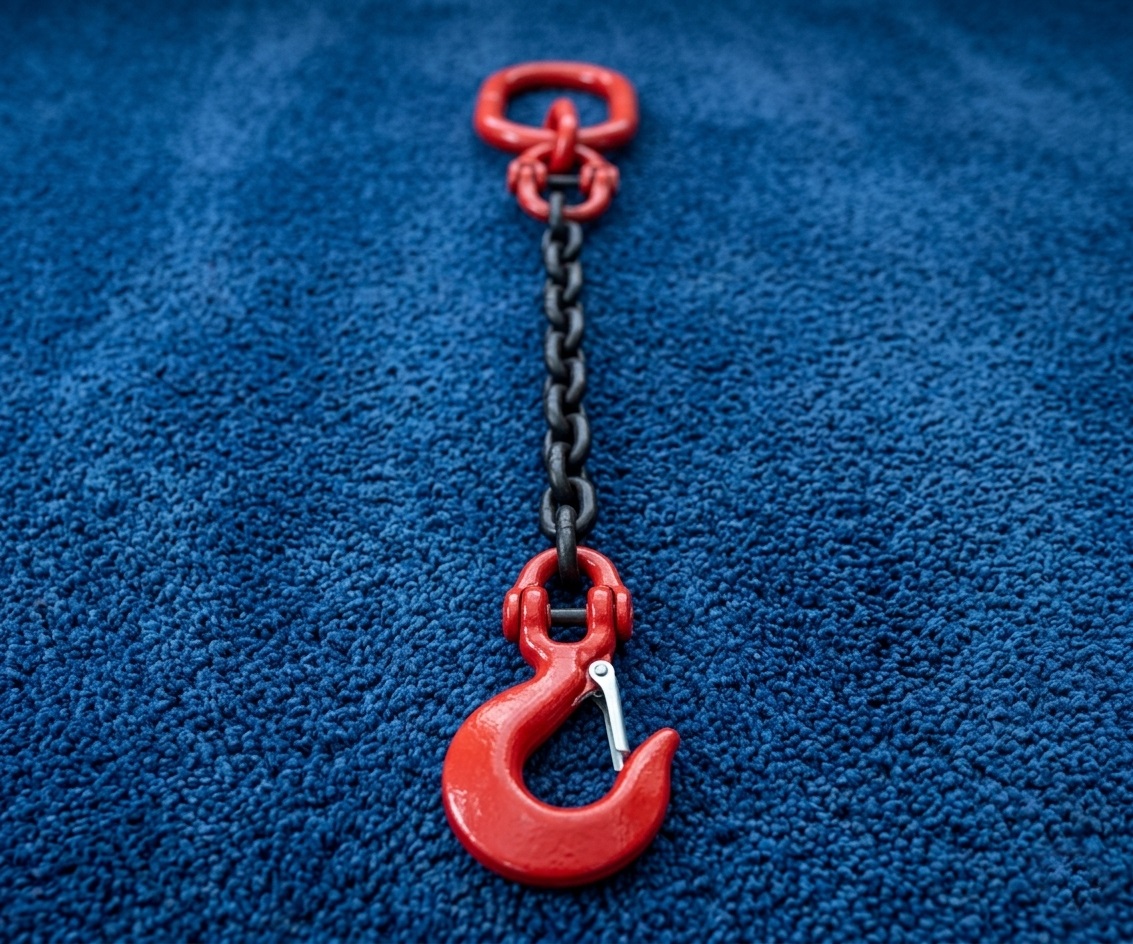
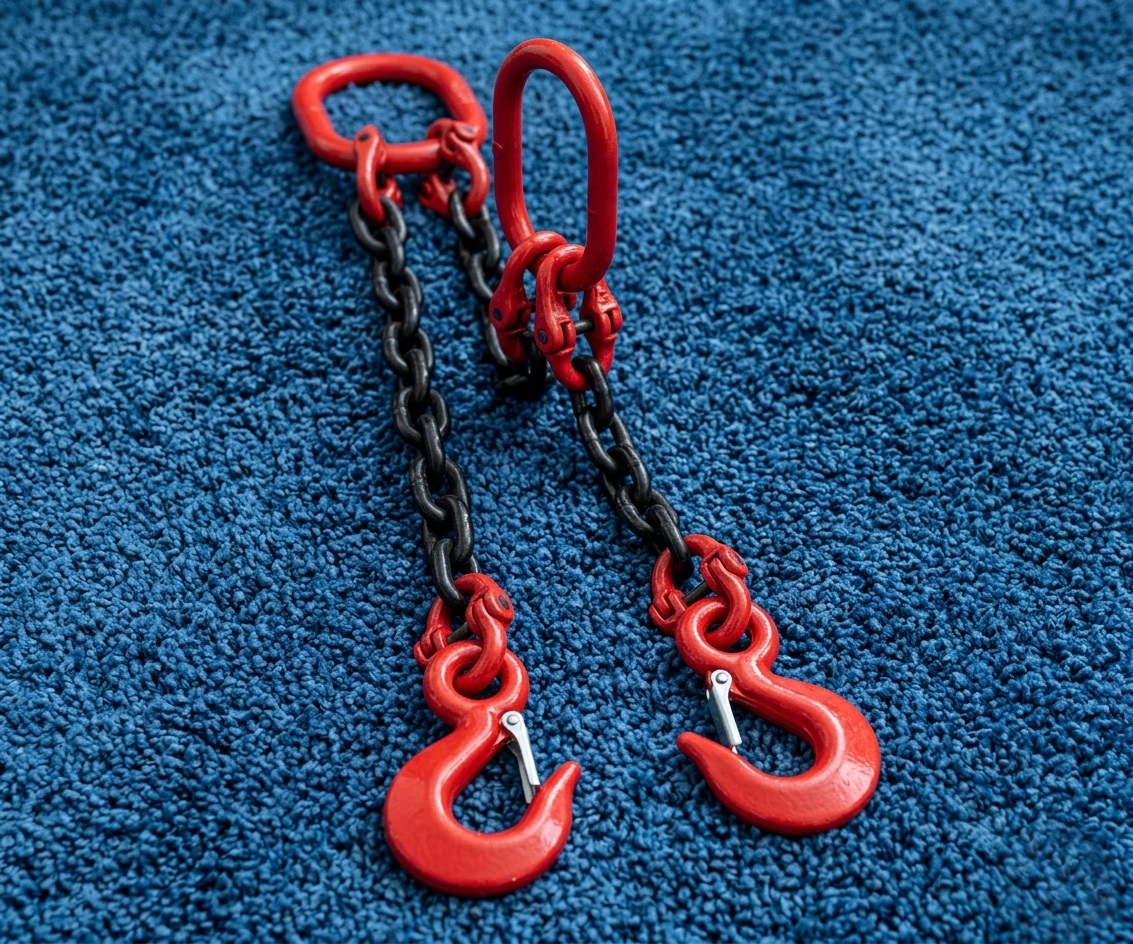
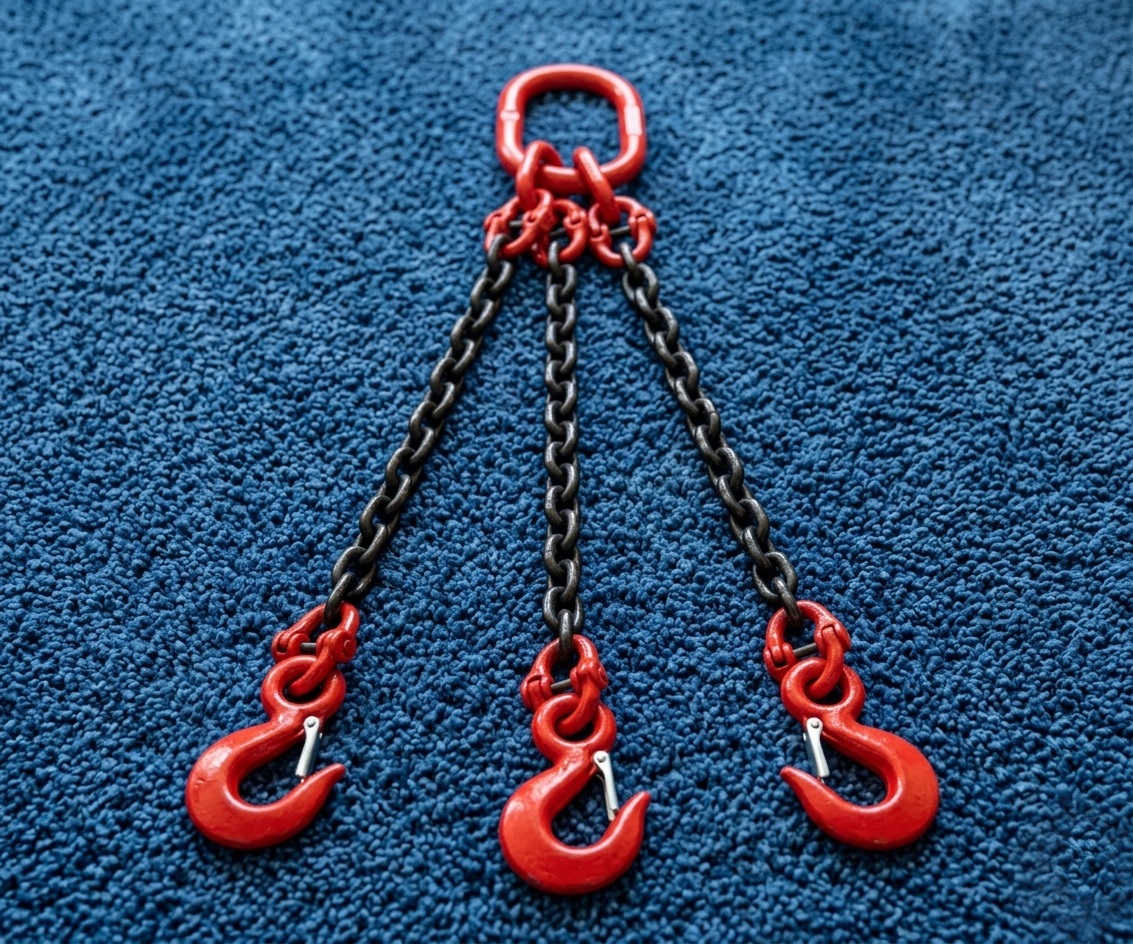
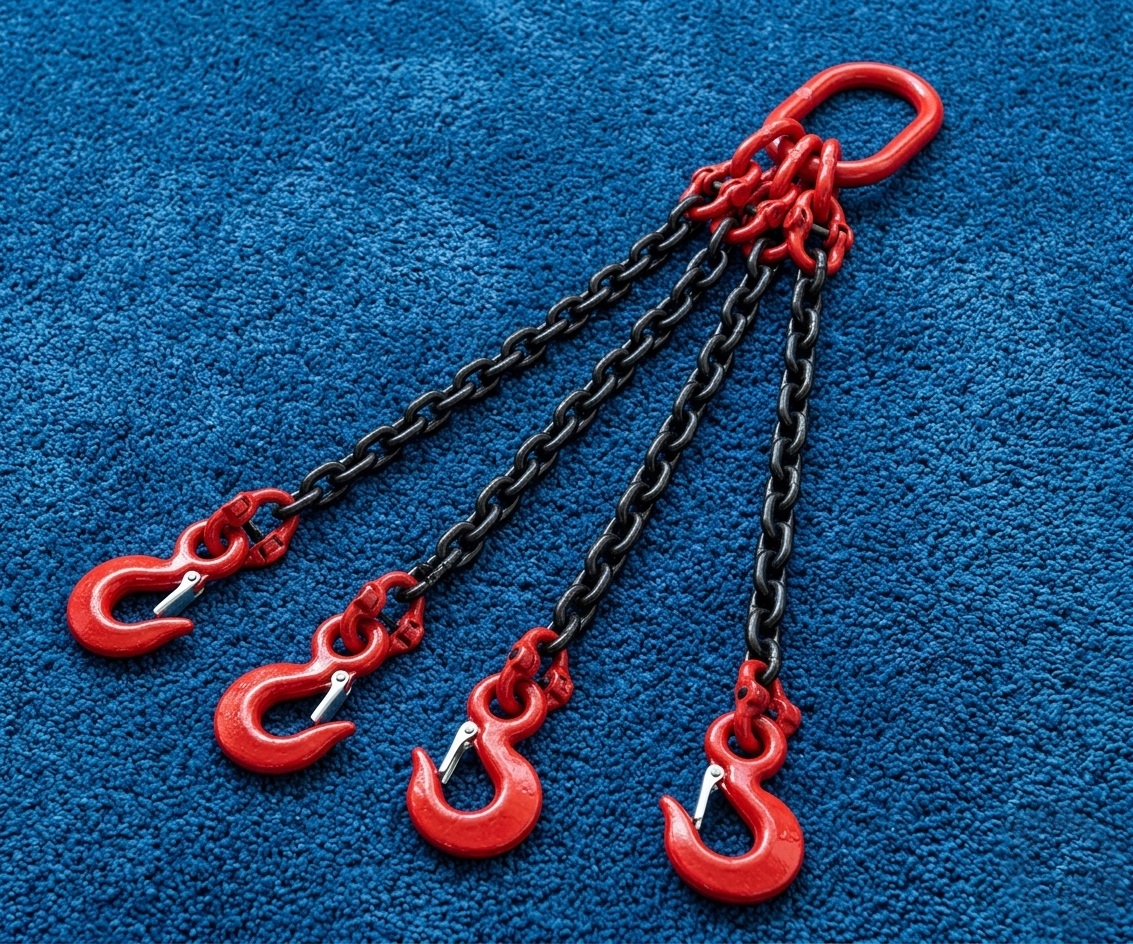
A chain
sling is an essential piece of lifting equipment, typically manufactured from
high-strength alloy steel. It is designed to connect a load to a lifting
device, such as a crane or a hoist. A standard assembly consists of a top master
link (which connects to the crane hook), one or more legs (the
chain), and end fittings (hooks or other attachments) that connect
directly to the load.
Where It Is Used & Applications
Chain
slings are the "heavy hitters" of the rigging world and are preferred
in environments where conditions are harsh. They are primarily used in:
- Construction: Lifting steel beams,
pre-cast concrete structures, and heavy machinery.
- Manufacturing &
Engineering:
Moving heavy equipment on factory floors.
- Steel Mills & Foundries: Because they are made of
steel, they can withstand high temperatures where synthetic slings (like
polyester or nylon) would melt.
- Maritime/Shipping: Loading and unloading heavy
cargo containers and ship components.
- Oil & Gas: Handling heavy drill pipes
and offshore rig equipment.
Working Load Limit (WLL) Details
The Working
Load Limit (WLL) is the maximum mass or force that a chain sling is
authorized to support in general service when the load is applied vertically.
Important
Note for Safety: The WLL
of a chain sling is highly dependent on the angle of the legs. As the
angle of the sling legs from the vertical increases, the tension in the legs
increases, which significantly reduces the effective lifting capacity of the
assembly.
Capacity Reduction Based on Angle
For a
standard multi-leg sling, the WLL changes based on the angle at which the legs
are positioned:
|
Angle of Legs (from vertical)
|
Load Factor (Percentage of
WLL)
|
|
0° (Vertical)
|
100%
|
|
30°
|
86.6%
|
|
45°
|
70.7%
|
|
60°
|
50%
|
- Rule of Thumb: Never lift at an angle
greater than 60° from the vertical unless specifically engineered to do
so, as the load on the chain increases exponentially.
- Grade Matters: Most industrial chains are
Grade 80 or Grade 100. Grade 100 chains provide a higher WLL for the same
diameter as Grade 80, allowing for lighter, more manageable slings.
Advantages of Chain Slings
Chain
slings offer several distinct advantages over wire rope or synthetic webbing
slings, making them a staple in high-duty industrial environments:
- High Heat Resistance: They can be used in extreme
temperatures (up to 400°C/750°F with minimal derating) without losing
structural integrity.
- Durability: They are resistant to sharp
edges, abrasion, and punctures, which often destroy synthetic slings.
- Flexibility: They are easy to wrap
around irregular loads and can be adjusted in length using shortening
hooks or clutches.
- Inspectability: Wear, stretch, and damage
to chain links are visually easier to identify compared to the internal
wear of a wire rope.
- Repairability: Unlike synthetic slings,
which must be discarded when damaged, individual links or components of a
chain sling can often be repaired or replaced by certified professionals,
extending the service life of the equipment.